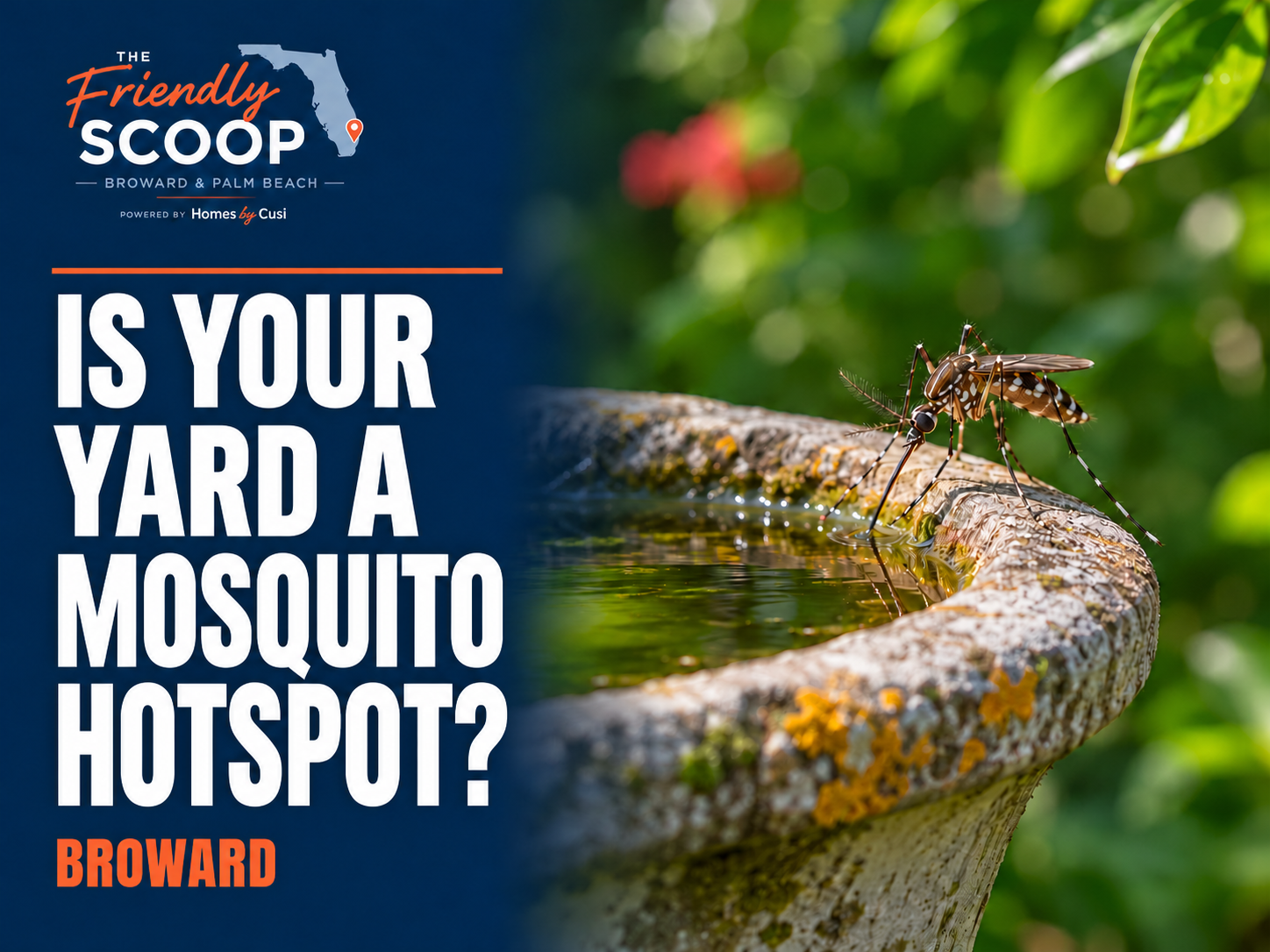
Illustrative photo, not a Broward incident. Photo: Rept0n1x, via Wikimedia Commons, CC BY-SA 3.0. Cover adaptation: navy overlay, official logo and typography added; adaptation licensed CC BY-SA 3.0.
Broward Mosquito Advisory: What It Means and How to Protect Yourself
Published November 8, 2026
The Friendly Scoop · 4 minThe Florida Department of Health in Broward County issued a mosquito-borne illness advisory in early October after a locally acquired dengue case, and health officials renewed their prevention reminder this week. Here is what the advisory means, the symptoms and warning signs to know, and the exact steps officials recommend.
Jump to a section
- The Quick Scoop
- What the Advisory Means
- Dengue Symptoms and Warning Signs
- How to Protect Yourself and Your Family
- The Bottom Line
- FAQ
The Quick Scoop
- The Florida Department of Health in Broward County (DOH-Broward) issued a mosquito-borne illness advisory on October 5, 2026, after confirming one locally acquired case of dengue fever.
- The state's most recent weekly surveillance report, covering the week ending October 31, 2026, still listed Broward County under the advisory.
- On November 4, 2026, DOH-Broward renewed its reminder for residents and visitors to prevent mosquito bites and eliminate standing water.
- Dengue is usually spread through the bites of infected Aedes mosquitoes, not through ordinary casual contact, according to the CDC.
What the Advisory Means
DOH-Broward issued the mosquito-borne illness advisory on October 5, 2026, after confirming a human case of locally acquired dengue fever, meaning the person was infected in Broward rather than while traveling. DOH-Broward and Broward County Mosquito Control announced they are coordinating surveillance, prevention, and control efforts.
The Florida Department of Health's statewide arbovirus surveillance report for the week ending October 31, 2026, the most recent weekly report available, still listed Broward among 11 Florida counties under a mosquito-borne illness advisory. Palm Beach County was also listed in that report. The state posts an updated report each week.
On November 4, 2026, DOH-Broward released a renewed reminder urging residents and visitors to protect themselves against mosquito-borne diseases such as dengue.
Dengue Symptoms and Warning Signs
According to DOH-Broward, dengue can present as a flu-like illness with severe muscle aches and joint pain, fever, and sometimes a rash. There are usually no respiratory symptoms. Symptoms appear within 14 days after being bitten by an infected mosquito. The CDC notes a blood test is the only way to confirm a dengue diagnosis, so see a healthcare provider if you develop these symptoms after mosquito bites rather than trying to self-diagnose.
The CDC says about 1 in 20 people who get sick with dengue develop severe dengue, which is a medical emergency. Warning signs usually begin 24 to 48 hours after the fever goes away. Immediately go to a local clinic or emergency room if you or a family member has any of these warning signs:
- Belly pain or tenderness
- Vomiting at least 3 times in 24 hours
- Bleeding from the nose or gums
- Vomiting blood, or blood in the stool
- Feeling extremely tired, restless, or irritable
How to Protect Yourself and Your Family
DOH-Broward recommends these steps:
Use repellent the right way. Apply insect repellent to exposed skin or clothing, not under clothing, and always read the label directions before applying. Some repellents are not suitable for children, so make sure the repellent is safe and age-appropriate. DOH-Broward notes that EPA-registered repellents are proven safe and effective when used as directed, even for pregnant and breastfeeding women. You can also treat clothing and gear with products containing 0.5% permethrin, but never apply permethrin directly to skin.
Dress to block bites. Wear loose-fitting, long-sleeved shirts and pants when mosquitoes are active. Mosquitoes can bite at any time, day or night.
Dump standing water every week. Mosquitoes breed by laying eggs in and near standing water, and as little as one cap of water standing for more than a week is enough for them to breed and multiply. At least once a week, empty or cover anything that could hold water: buckets, toys, child pools and pool covers, birdbaths, trash, containers, recycling bins, boat or car covers, roof gutters, coolers, pet dishes, and tires.
Keep mosquitoes outside. Use air conditioning and keep screens on all windows. Repair holes in screens and keep doors and exterior windows closed.
The Bottom Line
Broward's mosquito-borne illness advisory remained in effect in the state's most recent weekly report, and health officials are asking residents to take simple precautions seriously: use repellent correctly, cover up, dump standing water weekly, and keep mosquitoes out of the house. Know the severe-dengue warning signs and seek emergency care if they appear after a fever.
Sources
- Florida Department of Health in Broward County, "DOH-Broward Health Officials Urge Mosquito-Borne Illness Awareness," November 4, 2026
- Florida Department of Health in Broward County, "DOH-Broward Issues Mosquito-Borne Illness Advisory," October 5, 2026
- Florida Department of Health, Florida Arbovirus Surveillance report, week ending October 31, 2026
- CDC, "How Dengue Spreads"
- CDC, "Symptoms of Dengue and Testing"
Health department guidance and advisory status checked November 8, 2026. Advisory status reflects the state's most recent weekly report, covering the week ending October 31, 2026; the state posts an updated report each week.
Frequently Asked Questions
Is Broward County under a mosquito advisory?
As of the Florida Department of Health's most recent weekly surveillance report, covering the week ending October 31, 2026, Broward County was listed under a mosquito-borne illness advisory. The state publishes an updated report every week.
Why did Broward get a mosquito-borne illness advisory?
DOH-Broward issued the advisory on October 5, 2026, after confirming a human case of locally acquired dengue fever. Locally acquired means the infection happened in Broward, not during travel.
What are the symptoms of dengue?
DOH-Broward describes dengue as a flu-like illness with fever, severe muscle aches and joint pain, and sometimes a rash, usually without respiratory symptoms. Symptoms appear within 14 days of an infected mosquito's bite. See a healthcare provider if you develop these symptoms after mosquito bites; a blood test is the only way to confirm dengue.
What are the warning signs of severe dengue?
The CDC lists belly pain or tenderness, vomiting at least 3 times in 24 hours, bleeding from the nose or gums, vomiting blood or blood in the stool, and feeling extremely tired, restless, or irritable. Warning signs usually begin 24 to 48 hours after the fever goes away. Severe dengue is a medical emergency; immediately go to a local clinic or emergency room.
Can you catch dengue from another person?
The CDC says dengue is usually spread through the bites of infected Aedes mosquitoes, not through ordinary casual contact. Rarely, it spreads through other routes such as blood transfusions or organ transplants.
What is the best way to avoid mosquito bites?
Use an EPA-registered repellent as directed, wear loose-fitting long sleeves and pants, keep screens and windows in good repair, and empty or cover anything that holds standing water at least once a week.